

Main Geomembrane Types and When to Use Them
Carthage Mills’ Geomembrane selection guide compares the primary options side-by-side. Here’s a summary of the key materials:
LLDPE Geomembrane (Linear Low-Density Polyethylene)
Thickness: Typically 20, 30, or 40 mil.
Strengths: Excellent outdoor longevity and UV resistance (especially with carbon black content). High elongation, tear resistance, and burst strength. Good for potable water containment. Flexible enough to conform to irregular surfaces.
Best for: Decorative ponds, many water containment applications, situations needing flexibility and outdoor exposure tolerance. Custom sizes available.
HDPE Geomembrane (High-Density Polyethylene)
Thickness: 20–120 mil (wider range for heavier duty). Often supplied in large 22-foot-wide rolls.
Strengths: Excellent for heavy-duty liner applications. Strong UV and carbon black protection, exceptional dimensional stability, and anti-slip properties (textured options available). High puncture, abrasion, and chemical resistance.
Best for: Demanding containment such as landfills, mine tailing ponds, oilfield applications, and other high-stress or long-term buried uses. Stiffer than LLDPE, so subgrade preparation is important.
PVC Geomembrane (Polyvinyl Chloride)
Thickness: 20–60 mil.
Strengths: Contractor-friendly installation. Available in potable water, fish-grade, and oil-resistant formulations. Good flexibility.
Best for: Projects where ease of handling and installation matter, certain water features, and applications needing specific chemical resistance grades. Custom sizes available.
Reinforced Geomembranes / Liners (e.g., Duraskrim and woven-coated styles)
Thickness: Often 6–45 mil.
Construction: Tear-resistant reinforced scrim laminated between sheets of high-strength polyethylene.
Strengths: Enhanced strength, excellent tear resistance, and outdoor durability.
Best for: Applications needing extra puncture and tear protection while remaining relatively lightweight and workable.
Specialty Geomembranes / Liners (Absolute Barrier™, XR5®, and similar)
These deliver maximum performance with extreme puncture, chemical, and tear resistance. They excel in fuel/oil containment and chemically aggressive or highly demanding environments. Contact us for details on these advanced options.
Matching Material to Application
The selection guide includes an applications matrix. Examples include:
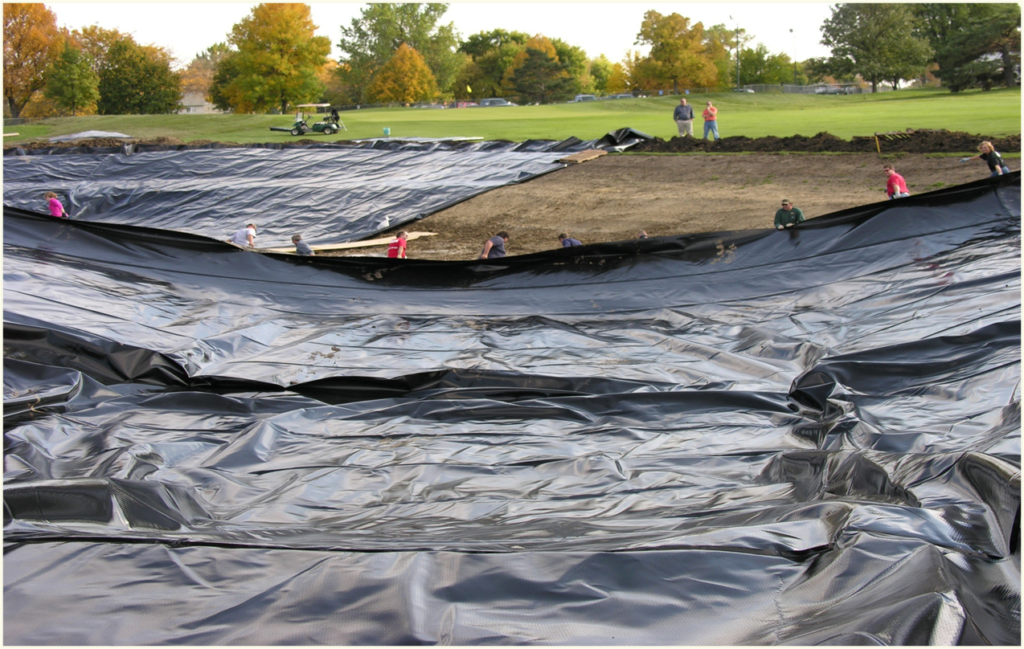
- Decorative ponds and golf course ponds → Often LLDPE or PVC.
- Canal liners, irrigation, and reservoirs → LLDPE, HDPE, or PVC depending on scale and exposure.
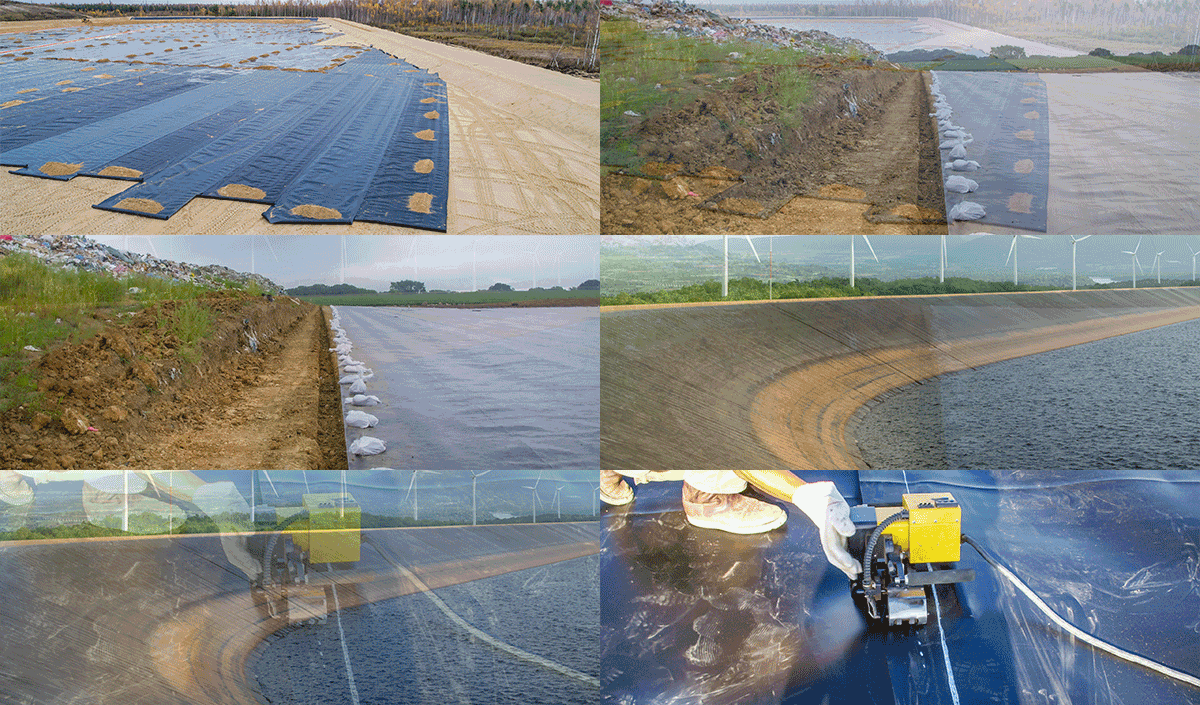
- Landfills (interim covers or primary liners), mine tailing ponds, and remediation → Frequently HDPE or specialty liners for chemical and mechanical robustness.
- Oilfield pits, frac pits/tanks, and hydrocarbon exposure → Specialty or oil-resistant formulations, sometimes reinforced or HDPE.
- Aquaculture and agricultural containment → Fish-grade or potable options in PVC or LLDPE.
- Stormwater systems and rain storage → Flexible, UV-stable choices matched to expected loads.
Always cross-check the contained fluids against chemical resistance data and confirm thickness against site conditions and any regulatory minimums.
Practical Selection Tips
- Define the primary function and exposure early — containment type, expected life, buried vs. exposed.
- Assess the subgrade — soft, rocky, or settlement-prone sites favor higher flexibility (LLDPE) or reinforced products plus proper cushioning (often a nonwoven geotextile).
- Consider seaming and installation — Factory panel fabrication can reduce field seams. Welding methods and crew experience vary by material.
- Factor in UV and environmental resistance if any exposure is expected during construction or service.
- Review datasheets and the full selection guide for specific performance values (tensile, puncture, elongation, etc.).
- Consult early — Regulations, site-specific testing, or unique chemicals may require specialty solutions.
Carthage Mills geomembranes are engineered for resistance to UV, chemicals, ozone, and environmental degradation, with options for custom fabrication and proven joining methods for both factory and field use. We support projects nationwide with competitive availability and technical guidance.
Next Steps to Choose the Best Geomembrane…
Download the free Geomembrane / Liner Selection Guide for the full comparison tables and application matrix. Visit our geomembranes product page for more details, or contact our team at 800-543-4430 for project-specific recommendations, quotes, or help matching a liner to your exact conditions.
Selecting the right geomembrane up front protects the environment, meets regulatory needs, and delivers the long-term performance your project requires. We’re here to help you get it right.