

Geosynthetics for Extreme Weather
Standing Strong Against Extreme Weather: How Geosynthetics Protect Infrastructure
Geosynthetics for Extreme Weather – Extreme weather is no longer rare. Catastrophic hurricanes, intense flooding, prolonged droughts, heat waves, and severe cold snaps are becoming more frequent and intense worldwide. These events put enormous pressure on roads, shorelines, embankments, water systems, and other critical infrastructure. Protecting these assets while controlling costs and supporting sustainability has become a top priority for engineers, contractors, and public agencies.
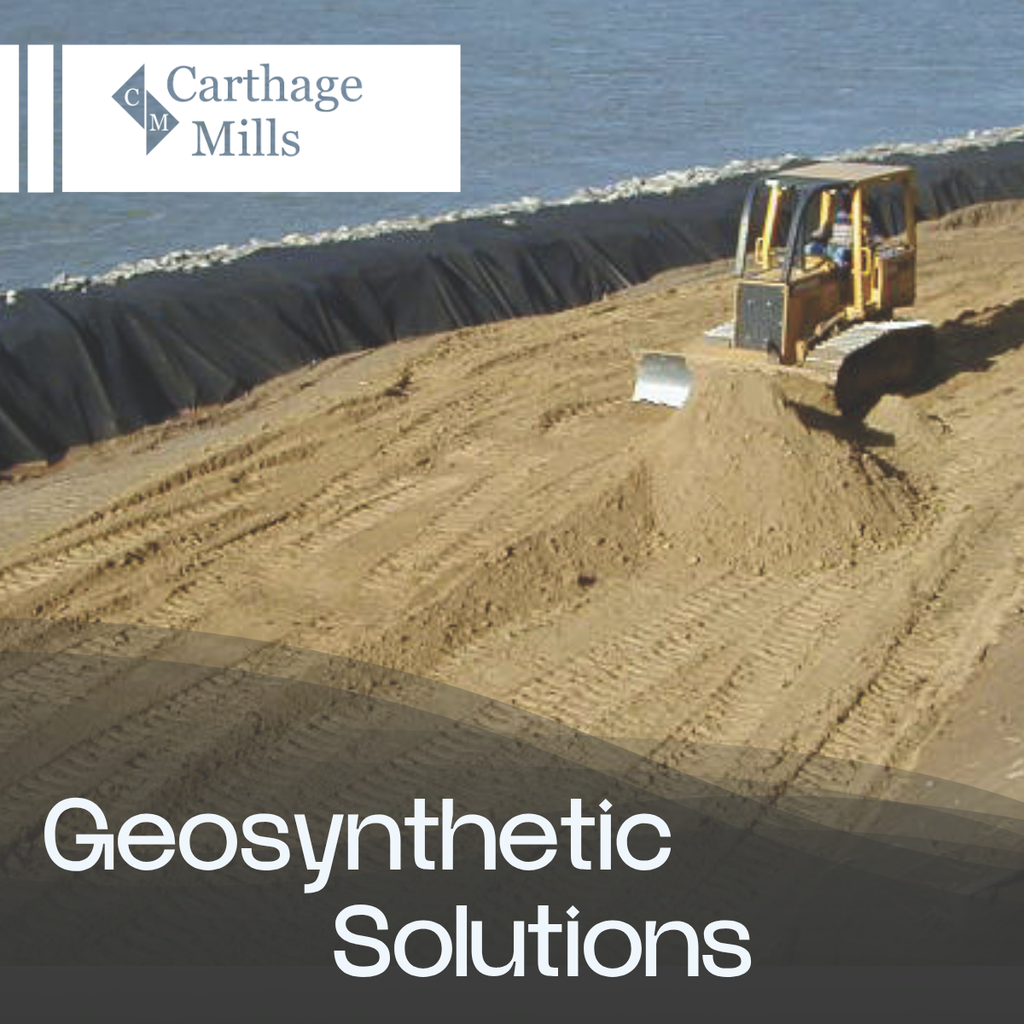
Geosynthetics deliver proven solutions. These engineered materials—geotextiles, geogrids, geocells, geomembranes, turf reinforcement mats, and related products—strengthen soil, control erosion, manage water, and extend the life of structures under demanding conditions. They often reduce the need for large volumes of traditional materials such as rock, sand, and aggregate, which can lower construction time, costs, and environmental impact. Their performance is recognized and guided by leading standards organizations and agencies, including the American Association of State Highway and Transportation Officials (AASHTO), the U.S. Army Corps of Engineers (USACE), and the International Geosynthetics Society (IGS).
Geosynthetics for Extreme Weather – A Foundation Built on Experience
Carthage Mills, America’s first geosynthetics company, has been at the forefront of this technology since 1958. The company pioneered the development of woven synthetic filter cloth as a practical alternative to graded granular filters under riprap for shoreline protection. That early innovation helped launch the modern geosynthetics industry.
Today, Carthage Mills continues to supply a comprehensive range of high-performance products designed for transportation, civil engineering, environmental protection, and stormwater management applications across North America and beyond. Many of these products meet or exceed widely adopted specifications such as AASHTO M 288 for highway applications (covering subsurface drainage, separation, stabilization, permanent erosion control, and related uses) and support compliance with the Build America, Buy America Act (BABA) requirements for domestic content on federally funded infrastructure projects.
Key Ways Geosynthetics for Extreme Weather Build Resilience
Erosion control and shoreline/slope protection In coastal zones, riverbanks, channels, and steep slopes, heavy rainfall and wave action can rapidly strip soil and undermine foundations. Woven monofilament geotextiles (such as Carthage Mills’ % Open Area Series, including products like Carthage 6%) act as durable filters and separators beneath armor stone or other cover. They allow water to pass while retaining soil fines, preventing settlement and erosion. Nonwoven geotextiles (FX®-HS Series) provide multipurpose separation, filtration, and drainage.
For permanent solutions on moderate to severe sites, turf reinforcement mats and systems like ARMORMAX® combine high-performance mats with anchors to support vegetation, delivering long-term protection while encouraging root growth for natural reinforcement. These approaches align with practices long employed by agencies such as the USACE in levee, shoreline, and embankment projects.
Soil stabilization and reinforcement Weak subgrades and embankments are especially vulnerable during storms or freeze-thaw cycles. Geogrids (including biaxial GBX™ Series and SRW uniaxial options) and geocells (CX™ Series cellular confinement systems) distribute loads, increase bearing capacity, and stabilize soil. These materials help roads, haul roads, parking areas, levees, and reinforced slopes perform better under extreme hydraulic and mechanical stresses. High-performance woven geotextiles further support base reinforcement and steepened embankments. AASHTO specifications and guidance from transportation agencies help ensure consistent performance criteria for these applications.
Water management and containment Flooding and water scarcity both demand better control of stormwater and stored water. Geomembranes serve as liners and floating covers for reservoirs, helping protect water quality and reduce evaporation. Nonwoven geotextiles and stormwater best-management-practice products (filter bags, silt fence, wattles, stormwater inlet filters) capture sediment, filter runoff, and support infiltration systems that reduce flooding risk and protect surrounding environments from contaminants.
These solutions contribute to sustainability by enabling longer-lasting infrastructure, reducing material volumes, and often supporting vegetated systems that improve aesthetics and water quality. The International Geosynthetics Society (IGS), a global learned society dedicated to the scientific and engineering development of geotextiles, geomembranes, and related technologies, continues to advance understanding and appropriate use of these materials worldwide . Many products also appear on state Department of Transportation approved lists and undergo evaluation through programs such as AASHTO’s National Transportation Product Evaluation Program (NTPEP).
Why Adoption of Geosynthetics for Extreme Weather Continues to Grow
As extreme weather intensifies, designers and owners increasingly look for materials that deliver durability, cost-effectiveness, and faster installation. Geosynthetics for extreme weather address complex site challenges while lowering overall project costs and timelines compared with traditional hard-armoring approaches in many cases. Support from organizations including AASHTO, USACE, FHWA-related guidance on BABA compliance, and the IGS helps drive education, standardization, and broader adoption within the engineering community.
Carthage Mills’ decades of experience, domestic manufacturing focus, nationwide distribution network, and broad product portfolio—from geotextiles and geogrids to geocells, geomembranes, erosion-control blankets, turf reinforcement mats, and stormwater products—position the company to help projects stand strong. Whether protecting shorelines, reinforcing roadways, managing stormwater, or stabilizing slopes, the right geosynthetic solution can make infrastructure more resilient in the face of increasingly severe weather.
For project-specific recommendations or product details, contact Carthage Mills. Their team has been solving these challenges since the industry began.
Key references:
- Carthage Mills history / America’s first geosynthetics company: carthagemills.com/history
- AASHTO M 288 (Geosynthetic Specification for Highway Applications): Widely referenced standard for geotextile performance classes
- Build America, Buy America Act overview and geosynthetics classification guidance: Available via FHWA and related federal resources
- International Geosynthetics Society: geosyntheticssociety.org
- Examples of USACE geosynthetics applications in levees and related infrastructure (historical project reporting)